

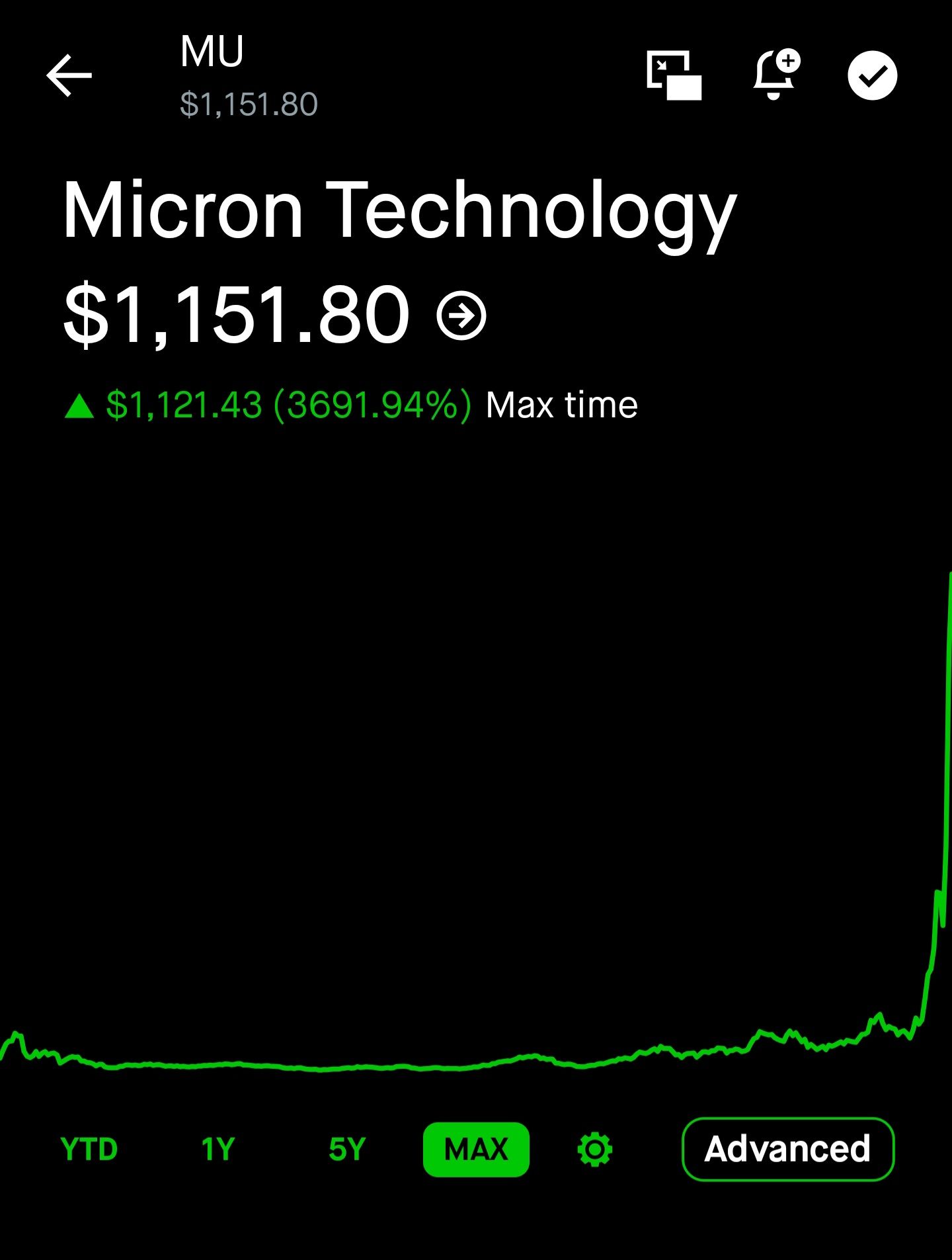
Hey, it's Sergio. If you've watched the market over the past few months, you've probably noticed something odd. The stocks leading this leg higher aren't the names everyone expects. Nvidia, Microsoft, and Broadcom still grab the headlines, but some of the biggest moves have come from memory and storage companies most retail investors quietly ignore. I'm talking about Micron Technology (MU) and SanDisk (SNDK).
The question I keep getting is the same one filling up financial Twitter: is this the last gasp of an AI bubble, or the opening act of the next phase of the boom?
I've traded through enough cycles to be wary of easy answers. After decades in bull and bear markets, my honest read is that both things can be true at the same time. Let me walk you through what's actually driving these stocks, and how I'm managing the risk.
Why Micron (MU) Became a Surprise AI Winner
For most of the AI rally, the spotlight belonged to Nvidia. That made sense. Every model needs enormous compute, and Nvidia sold the shovels for the gold rush. But the market always looks forward, and once investors understood how critical AI infrastructure had become, they went hunting for the next bottleneck.
That bottleneck turned out to be memory. Every AI server is packed with High-Bandwidth Memory (HBM), DRAM, and NAND flash storage. Strip the memory out and even the most powerful GPU becomes an expensive paperweight.
Micron stepped right into that gap. It's now one of the key suppliers of the HBM that AI data centers depend on, and management keeps reporting surging demand from hyperscalers. HBM has become one of the fastest-growing parts of the business, and analysts keep pointing to AI memory demand and data-center buildout as the reasons.
The market repriced the stock to match. Micron used to trade like a boom-and-bust commodity memory maker. Now investors treat it as strategic AI infrastructure. That shift in how the company is perceived is worth more than any single earnings beat.
Why SanDisk (SNDK) Became a Surprise AI Winner
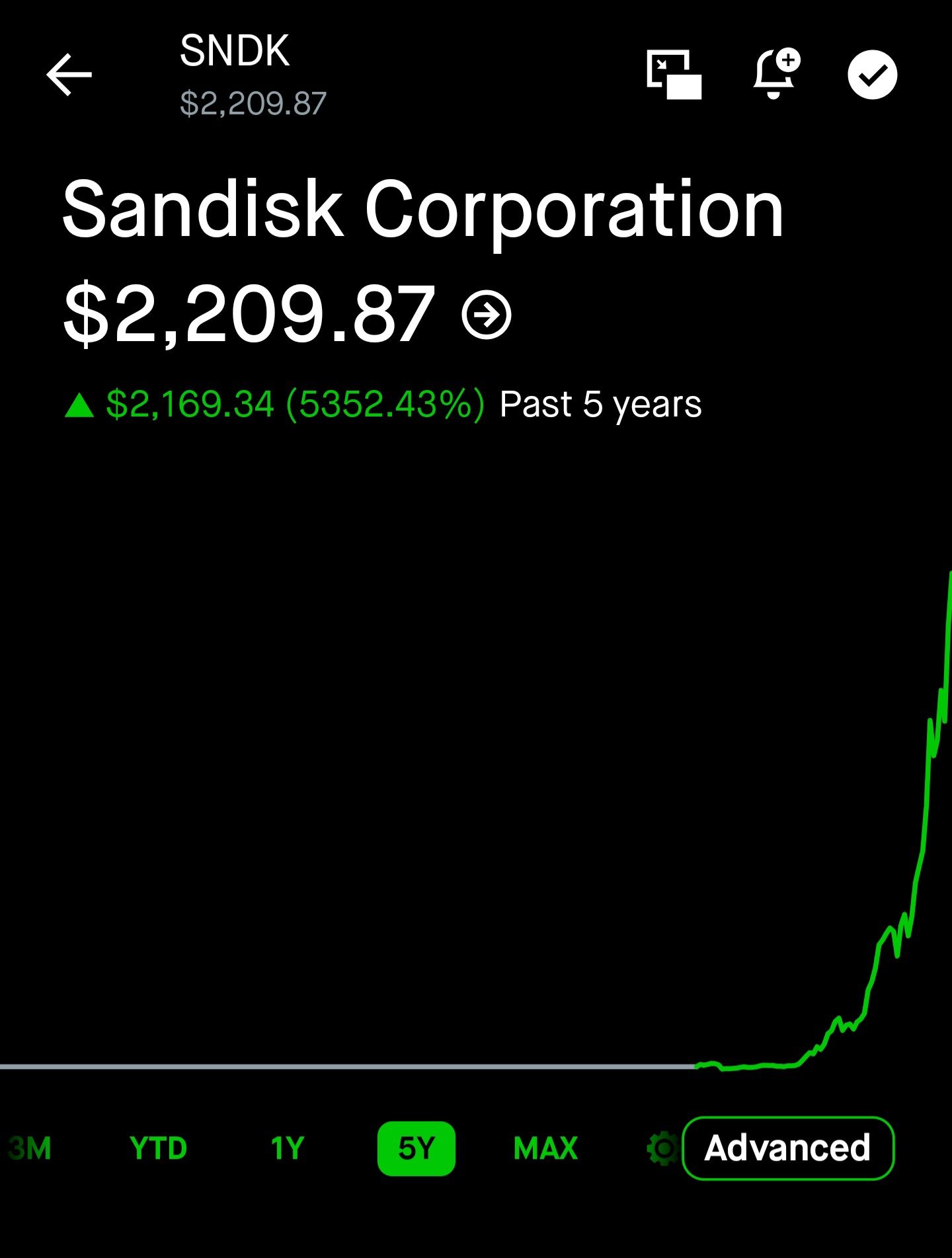
SanDisk is the bigger shock. After spinning off from Western Digital, it came back to the public market as a pure-play flash memory company, and the stock has put up gains that look like a typo until you check them twice. Investors finally woke up to how much NAND flash storage matters inside AI infrastructure.
Here's the part most people miss. Everyone knows AI needs compute. Fewer stop to think about where all the data actually lives. Training a large language model is only the first step. Once that model goes live, it generates and consumes staggering amounts of data that has to be stored and pulled back quickly. That's NAND flash and enterprise storage territory, and tighter supply with firmer NAND pricing has poured fuel on the move.
This is what I call a second-derivative AI trade. The investors who missed Nvidia started asking a smart question: who supplies the suppliers? Follow that chain far enough and you land on memory and storage.
The Trade Is Bigger Than Two Stocks
Micron and SanDisk get the attention, but the same tide has lifted the rest of the storage shelf. Look at Western Digital (WDC) and Seagate (STX). Both are old-guard hard-drive and storage names that spent years going nowhere, and both have ripped higher as the market connected the dots between AI data centers and the need to store everything those data centers produce.
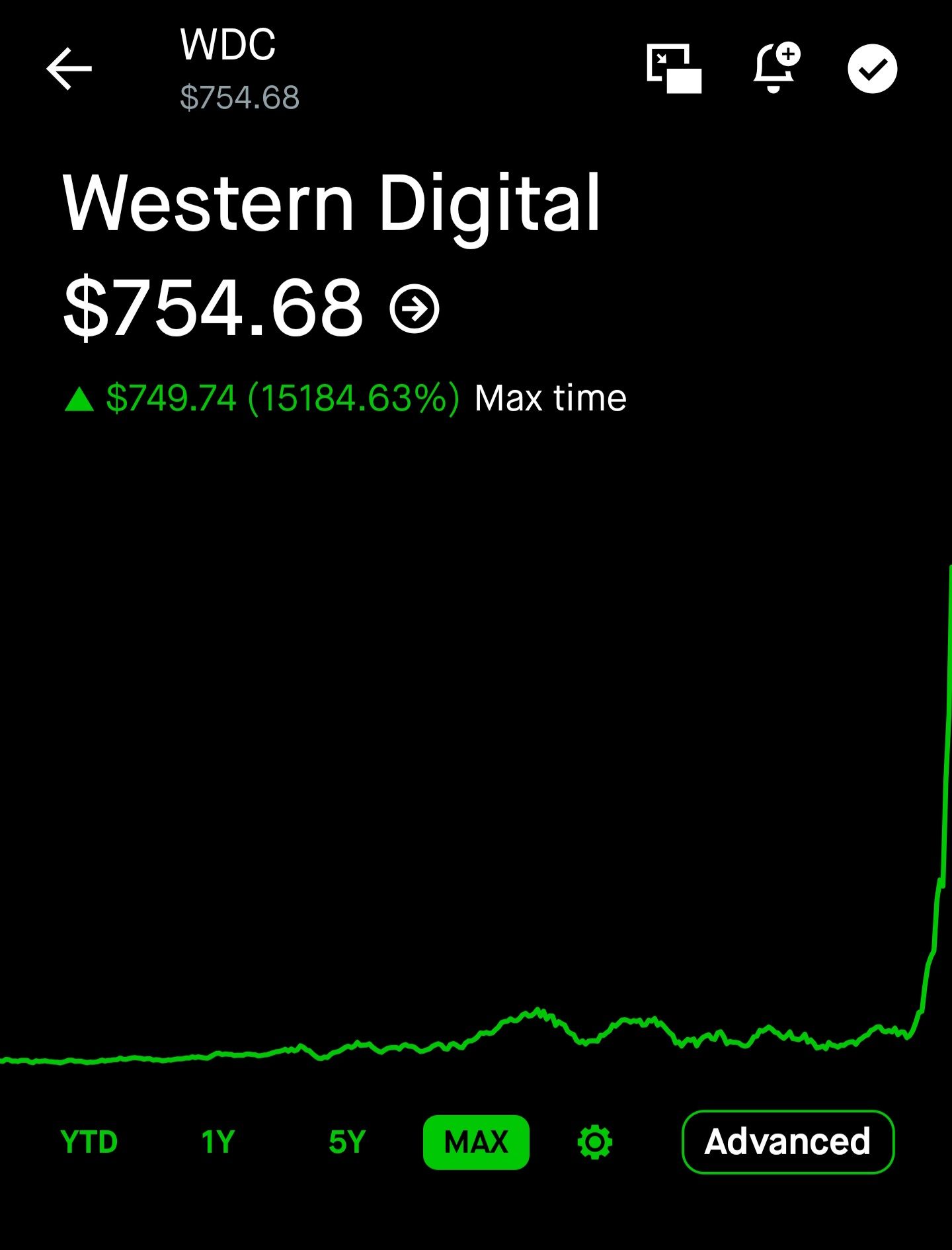
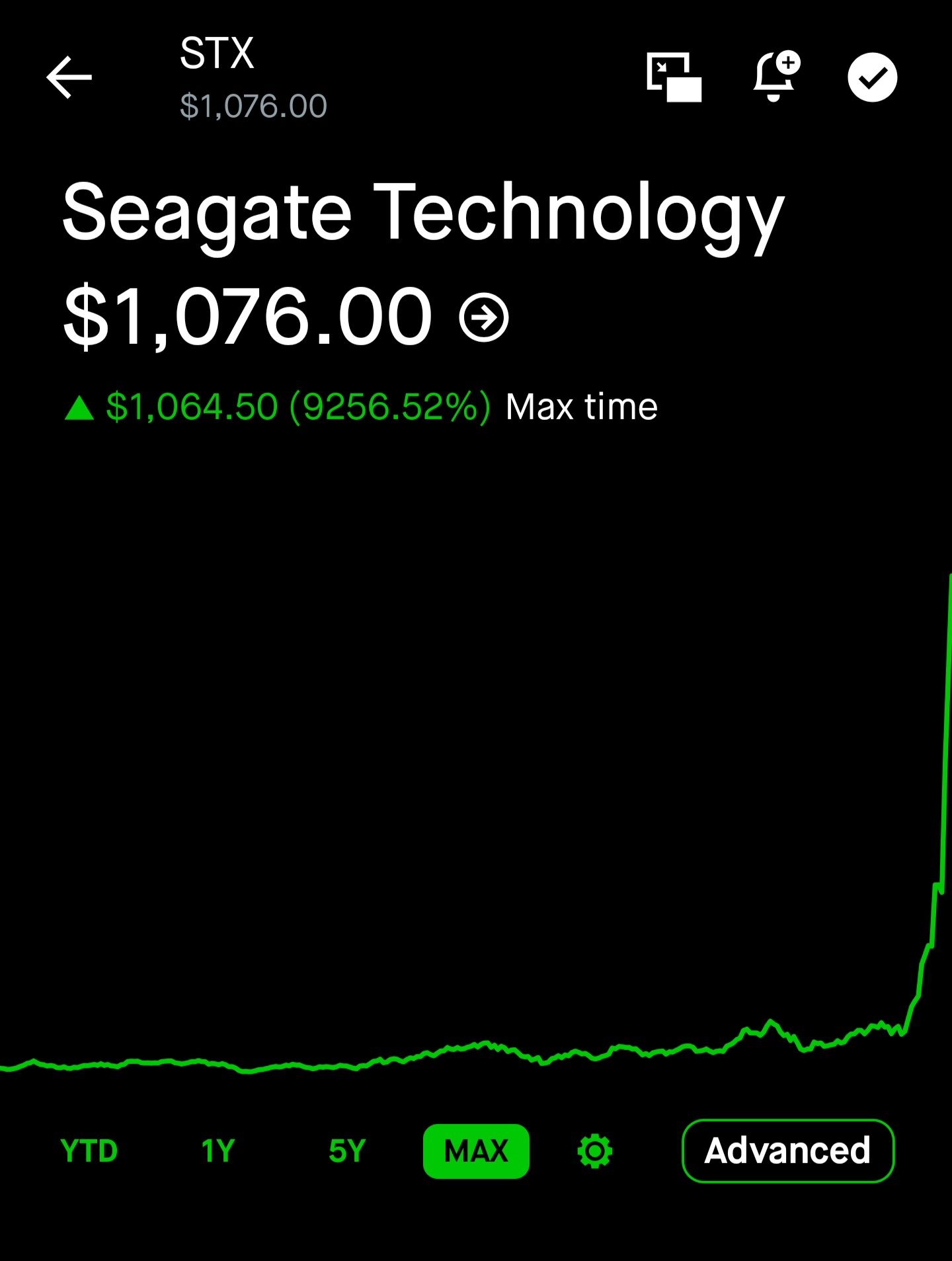
When an entire sector moves together like this, it tells me the rally is about more than one company's quarter. The market is repricing memory and storage as a structural piece of the AI buildout rather than a sleepy commodity corner. That's a powerful backdrop. It's also the kind of environment where latecomers chase and get hurt, so position size matters more than usual.
Are We Seeing Signs of an AI Bubble?
Any time a stock runs several hundred percent in a matter of months, you have to ask whether the price has gotten ahead of the business.
Part of me says yes. There's real speculation across the AI ecosystem right now. Valuations have stretched, capital spending from the big technology names has hit numbers we've never seen, and investors are paying today for growth they expect years down the road.
But here's what separates a true bubble from a strong trend. Bubbles usually float on little or no earnings. That's not the situation at Micron or SanDisk. Micron's revenue, earnings, and margins have all expanded in a serious way, and demand for AI memory is still outrunning supply in several categories. Even after the run, some analysts still consider the stock reasonable next to other AI leaders.
None of that makes these stocks correction-proof. They can pull back hard, and at some point they will, because nothing moves in a straight line. A correction inside an uptrend is normal. Mistaking one for the end of the trend is how people talk themselves out of good positions at the worst possible time.
How I'm Trading the Memory Boom
So where does that leave me? I'm treating the AI memory trade as real, but I'm not chasing green candles. When a name has already run thousands of percent, my entries get more patient, my position sizes get smaller, and my stops stay honest. The thesis can be right and the timing can still punish you if you size like the trend owes you something.
If you want my running commentary on these names and the rest of my watchlist, that's exactly what we do every day inside The Trading Desk. I share the trades I'm actually making, the ones I'm passing on, and the risk management behind both.
One last thing. I'm sharing how I think about these stocks, not telling you what to buy. Do your own homework, know your risk, and never put on a position you can't sleep through.
— Sergio


