

Hey, it's Sergio. Back in May 2024, I started a small experiment. I opened a Robinhood account, funded it with exactly $1,000, and set out to see what disciplined trading could actually do with a tiny balance. The goal was never to get rich, post screenshots for clout, or swing for the fences on lottery-ticket options.
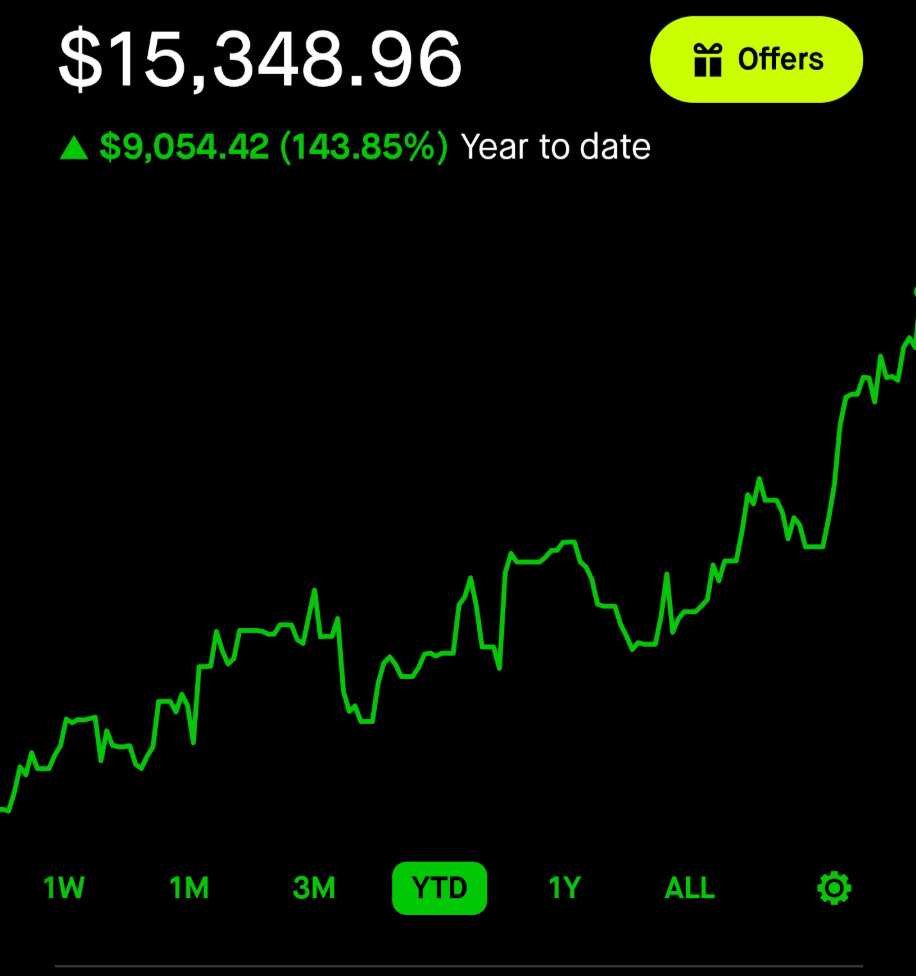
The question I wanted to answer was simpler. Could I take the same principles I've leaned on in the markets for decades, things like risk management, position sizing, and patient short-term trading, and use them to grow a small account?
As I write this, that $1,000 account sits at roughly $14,750.
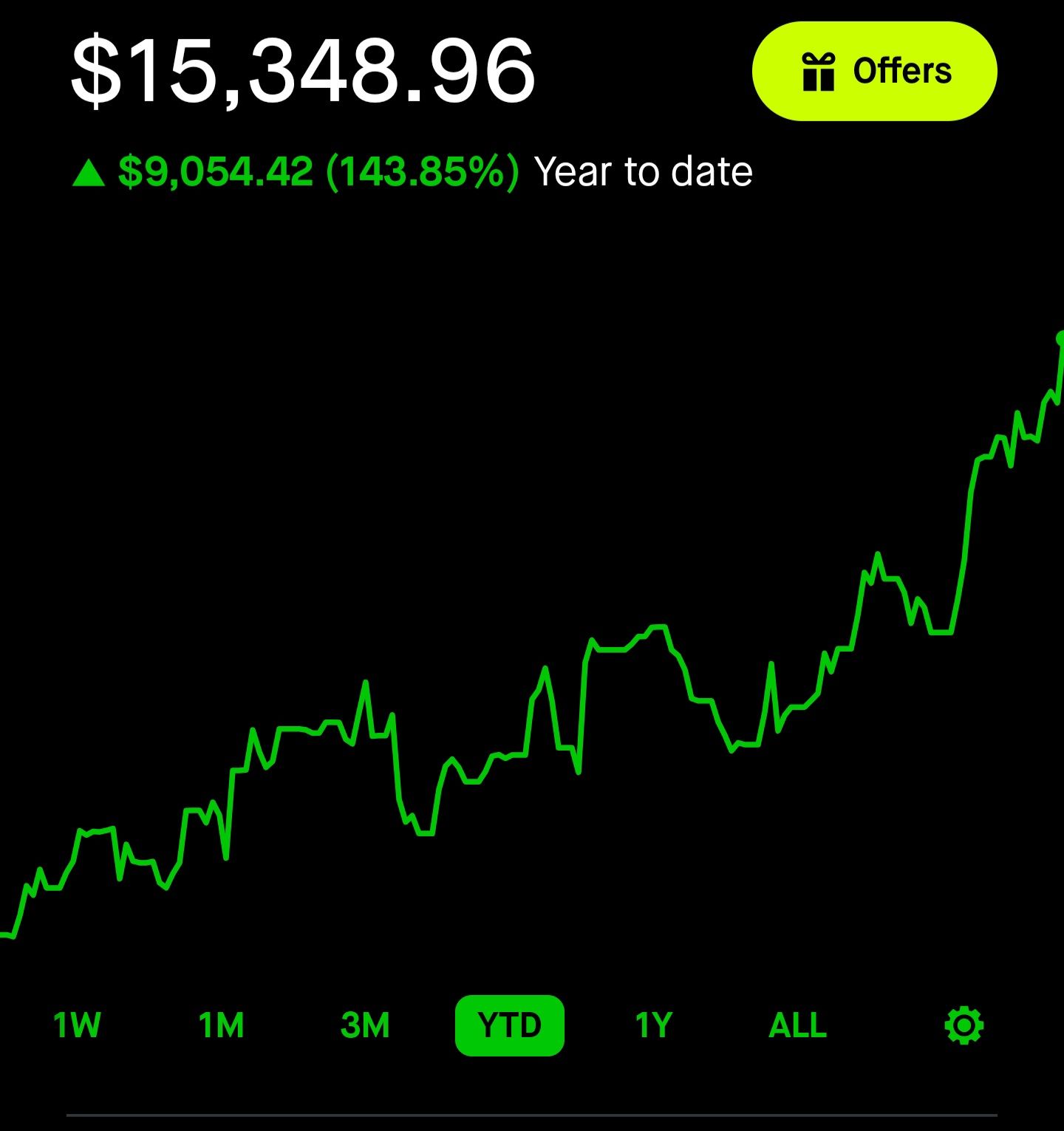
The return looks impressive, but the return isn't the story. The story is how risk management made it possible. Most traders pour their energy into finding the perfect stock. Professionals spend theirs protecting capital.
The account structure
This was never a buy-and-hold portfolio. Here's roughly how I run it:
- Short-term swing trades in equities
- Long and short stock positions
- Long and short option strategies
- Occasional mini futures contracts to hedge downside exposure
I'll hold a position anywhere from a few days to a few weeks, depending on what the market is giving me. The point isn't to call every move correctly. That's impossible. The point is to lose small when I'm wrong and let the winners run when I'm right. That's the foundation under every trading operation that lasts.
Why most small accounts blow up
There's a myth that growing a small account means taking big swings. It's backwards. Most small accounts die because the trader is in a hurry. They oversize positions, average down on losers, and refuse to take a loss. They buy out-of-the-money options praying for a miracle. Then one bad trade erases months of progress.
The market doesn't care how badly you want a trade to work. It rewards discipline and nothing else. The reason most traders never see real growth is that they never survive long enough for compounding to kick in. Capital preservation comes before profit, every single time. No capital, no next trade.
My number one rule: risk management
If you've followed my work over the years, you've heard me say it more times than you can count. Risk management is everything. Every trade starts with one question: how much do I lose if I'm wrong?
Notice it isn't "how much can I make?" That small shift changes everything. Before I enter, I already know where I'm getting out if it goes against me, the exact dollar amount I'm willing to lose, and how the position fits my overall exposure. The market is uncertain. My risk doesn't have to be.
That's why I'll risk only a small slice of account equity on any single trade. Surviving a losing streak matters far more than squeezing the most out of one winner.
Drawdown management: the skill nobody talks about
Everyone loves talking about gains. Almost nobody wants to talk about drawdowns, and that's a mistake, because managing them might be the most important skill in trading. A drawdown is the drop from your account's peak to its low point before it recovers. You can't avoid them. You can only control how deep they get.
When my account takes a real hit, I get defensive right away. Smaller size. Fewer setups. Pickier entries. I focus on rebuilding consistency instead of trying to win it all back in a weekend.
This is where a lot of traders dig the hole deeper. After a losing streak they size up, force trades, and try to make it back fast. That's exactly how a manageable drawdown turns into a catastrophic one.
The math is brutal. A 20% drawdown needs a 25% gain just to break even. A 50% drawdown needs 100%. The deeper you fall, the harder the climb back. That's why I spend more time preventing big losses than chasing big wins.
Why I hedge
One tool I've leaned on in this account is mini futures contracts, and not to speculate. I use them to hedge tail risk. When conditions get shaky, or my book gets too directional, a hedge can take some volatility off the table and protect profits.
Plenty of traders see hedging as a drag on returns. I see it as insurance. Insurance costs you something, sure. It also keeps you in the game when markets get ugly. I'm not trying to capture every last point of a rally. I'm trying to survive every correction.
The psychology of capital preservation
After decades in the markets, here's a truth that doesn't get enough airtime: good trading is usually boring. The financial media celebrates the big winners. Social media celebrates the overnight success. Nobody throws a party for the trader who quietly sidestepped a devastating loss.
But sidestepping the big losses is exactly what builds wealth over time. You don't need home runs. Singles and doubles, hit consistently, get the job done. Protecting your capital keeps you emotionally steady, and that steadiness is what makes discipline and consistency possible. That's the cycle that compounds.
Final thoughts
When I funded that account with $1,000 in May 2024, I wasn't trying to prove that anyone can turn pocket change into a fortune overnight. I was trying to show that disciplined principles still work.
Today, with the account closing in on $15,000, I'm proud of the result. But I'm prouder of how it got there. Not through reckless leverage, gambling, or chasing hot tips, but through risk management, drawdown control, and patience.
In trading, your first job isn't making money. It's making sure you're still standing tomorrow to put on the next trade. In this business, survival isn't just important. It's the whole thing.


